Thursday, 5 May 2016

communication skills assignment 1

First ideas

Animation of a man going into space and visiting the moon and seeing if he any find any life. After a short while of searching he finds an alien and has some fun. The equipment I would need a lot of clay and cardboard so I can make the different sets. My inspiration for this idea is "Wallace and Gromit - A Grand Day Out" as they build a rocket and fly to the moon and whilst there they encounter a robot called Cooker


Description: https://img2.blogblog.com/img/video_object.png


This will be a time lapse of a night sky starting from dusk and ending at dawn. Shutter speed will be left open longer than usual so that it can gather more light. This will be very challenging as lots of stuff could go wrong but night sky time lapses look amazing if I can make it well. I got my inspiration from YouTube videos people have made and some of the outcomes are brilliant.

Description: https://img2.blogblog.com/img/video_object.png


This will be a Animation of a person doing their daily tasks around the house. This could be interesting to see as it is such a basic idea but if i plan it out right then it could look really nice. I would film my mum do tasks like ironing clothes, doing the washing, cutting the grass etc.
Description: https://img2.blogblog.com/img/video_object.png


I chose the night sky time lapse as my animation as I feel like it the outcome if made good could be better than my other ideas, plus a night time lapse is different to a normal one as you have to put a lot more effort in rather than a normal time lapse.

Kit list

  • DSLR camera 
  • DSLR shutter remote
  • Tripod
I will need to find the right location where there is no light pollution and i need to find a night where it is not windy and not many clouds as this might ruin the footage. I will have to do a couple of test runs so that I can find the right exposure times for the camera.

Running times

6 minutes = 1 sec
360 / 25 = 15                    1 frame every 15 seconds


30 seconds

25 frames

750 images/ frames

Tine to have camera running

7 hours = 420mins

420 x 60 = 25,200

25,200 / 750 = 33.6
Description: https://img2.blogblog.com/img/video_object.png

1 photo every 30 seconds

http://www.lonelyspeck.com/the-milky-way-in-los-angeles-light-pollution/

Preparation

I need to find a day when there was hardly any clouds in the sky and the moon is hardly visible. This is because if the moon is out it creates more light which might disrupt the images. I plan to film at my granddads house as the is no light pollution, this means that when i take long exposures with my camera it wont pick up any light from near by lights. As i am filming a time lapse i need an option so that the camera could take a picture on its own without me having to click the shutter button, as my camera doesn't have a built in intervalometer i will buy one which plugs into the side of the camera.

 The intervalometer as four main settings:

Delay - how long between pushing "start" and the first photo

Long - how long the shutter will be open for

Interval - how often the shutter is triggered

Number - total number of shots taken

Production

Once i got my equipment ready i set up my equipment outside whilst it was still light, this makes it easier to see what I'm doing and i can frame my picture to how i want it. When i finished setting up the tripod and the camera. i had to change the camera settings so it is suitable for a time lapse, first i turn of VR (image stabilization) and turn the focus onto manual mode, this is because if you leave it on auto focus it might focus on something different like a tree when you want the stars to be in focus. Another thing i had to change was the focus ring, i looked through the view finder and focused the a tree far away in the distance then taped the ring so it wouldn't move, the focus is not set to infinity meaning it will be able to focus onto the stars.
I left the camera outside for about 2 hours to let it acclimatise to the cold conditions and once it was completely dark i went outside to do some test shots.

These where the settings for my first test shot:

ISO - 1600

Shutter speed - 20 seconds

Aperture - 3.5

When i looked at the image it was a little bit too light so i changed the shutter speed to 15 seconds, this was better. After fiddling around trying to get the best settings, the images were just getting worse. I gave the lens a wipe and took another test shot, the image was perfect which meant that the lens was misting up as it was in the cold. Unfortunately the only solution to this problem would mean me standing outside all night wiping the lens every half an hour. Also i got a plastic bag and cut some holes in to and placed it over the camera just in case it rained in the night, even though the weather forecast was clear you can never be too carefully. I wiped the lens and started the time lapse which meant by the time i wake up in the morning i could check the images and hope for the best.

When i got up in the morning i went straight outside to check the camera. The battery had died in the early hours of the morning (i didn't expect it too last all night anyway). After i had charged the battery a bit i put it back into the camera and had a look at the images, they looked good but you could see that after a while the lens mists up. Also you can tell in one of the frames i cleaned the lens as it goes from misty to clear.

Post Production

I got all the images from the camera (533) and put them onto the computer, this took a while as they were all shot in RAW format so the file sizes were quite big. I opened up premiere pro and clicked on import media, once you find where your images are kept i needed to click on the first image, click "image sequence" and click the last photo and it should open up all the images as a video sequence. But i had a problem, when i tried to import the photos it was saying the video sequence was only 5:15 seconds long. it had missed out most of the other pictures. After a long time of trying to sort this problem out i realised that it had stopped importing on the image where i cleaned my lens so i imported the first lot of images and then the rest of them.
And as i had 2 image sequences i just put them together and i then had my full time lapse. now that i had my time lapse in place i needed some titles to introduce the clip, i clicked on Title, New title and default still. I typed the title of my time lapse called "The Sky at Night" and dragged it into the time line. I did the exact same for the credits but i also added a fade in and a fade out by command clicking the beginning and end of the title and selection default transitions.
The last thing i needed was music. I wanted some nice piano music in the background so i went onto Free Music Archive and found a nice piece of music that fit well with my time lapse. Also everything on the site is public domain which means that no one owns copy-write so that everyone can use it. Once i downloaded it and put it into my time line i was ready to export. I went into export and media, this gave me loads options but all i needed to do was click on h.264 and then scroll down to HD 1080p 23.976, gave it a sensible name and then exported it.

Outcome

I was very pleased with the outcome of my time lapse as you can clearly see many stars and the music went perfectly with the clip. Next time i would prefer to make a time lapse in summer as its warmer on a night meaning the lens wont fog up and i get a clear picture.


Description: https://img2.blogblog.com/img/video_object.png


http://freemusicarchive.org/


Friday, 22 April 2016

Chapter 3 understanding media in the

Ofcom
Asa
Bbfc

Regulation is the control of mass media

To protect the public

To ensure universal availability to the population

To confirm to the rules

To promote high quality of content provided as far as possible according to locally decided values and standards, with particular references to information, education, advertisements and decency.

BBFC

The british board of film classification is an independent, non government organisation and responsible for the classification and videos in the UK.

The BBFC is important as it stops films being automatically released, which may contain obscene aspects or torture


Tuesday, 19 April 2016

Factual programming theory

Task 1

  • Accuracy - Making sure the statements is true as its a documentary
  • Balance - Showing both sides of a argument.
  • Impartiality - The opposite of bias
  • Objectify - being removed from the subject your dealing with/ not involved
  • subjectivity - Being a part of the thing you talk about is going to influience whjat you say.
  • Options - 
Task 2
  • Studio news readers
  • Field reporters
  • Interviewing
  • Experts and witnesses
  • Report structure
  • Realism 
  • Dramatization
  • Narrativisation

Wednesday, 9 March 2016

Documentary Pre-Production


Documentary theory


Accuracy

Accuracy is important when you talk about a certain subject. If you give a false statement then its going to cause problems when it comes to being watched. It is important that the facts are accurate as possible and don't twist stories. If you do end up twisting stories into something there not then people will find it hard to believe anything else they say. My documentary has to be believable otherwise the viewers will not follow what they are talking about. It makes a impact of the facts are good and true. Some news reporters get accuracy wrong when they want too be the first people to tell the story causing them to say things that might not be true as they are in such a rush to broadcast the story. A example of this would be the Hillsborough disaster as the sun quickly blamed the Liverpool fans for the disaster, this upset a lot of people including family of the people that died.

Balance

Having balance in a documentary is important and means that if you have two topics that you have to show each side of them equally so that you dont seem bias. You often see balanced arguments on news programmes where two or more people have a debate on a certain topic. The news channel will always pick people who have different opinions of the subject, so that you get too see both sides of the story. The head of BBC Arabic Tarik Kafala was talking about the Paris attacks and stated "We try to avoid describing anyone as a terrorist or an act as being terrorist" and went on to say "The UN has been struggling for more than a decade to define the word and they can't". Lots of people were outraged by this as it was completely one sided.

Bias 

Bias is basically the same as balance as its all about getting both sides of the story. Quite a lot of news channels have been accused of being bias, for example Fox News produced its own "Anti-Obama" video implying that all his promises were unkept. This was bias because they didnt show any arguments against it and only stuck too one side. This has an effect on people as they can get angry at the fact they are displaying a one sided story. It is essential that I'm not biased in my own documentary as it will effect the way people view it and what they think about the subject itself.

Impartiality 

Impartiality is the opposite of bias and is a also a problem in debates. If it is too open nothing will get resolved and you wont be able to hear both sides of the story to the extent of the problem. It effects people in a way that if they want to hear what a certain side has too offer, they cant because no one is sticking up for their opinion. Ofcom states that its principles are to "ensure that news in whatever form is reported with due accuracy and presented with impartiality"

Objectivity

Objectivity is where you are removed from the subject you are talking about, this can be a good thing or a bad thing as if you are hosting a debate but you are not involved in the subject, there is no way you can be biased towards that subject. but also if you don't know the subject too well you might accidental give out false information. There is a documentary on channel 4 called 'Meeting the taliban' where sean langan goes to meet the people that the British army are against, Ofcom stated that this 'must be treated with due objectivity'. This is because its quite a important subject and if anything is in accurate then it could cause a lot of trouble.

Subjectivity

As i stated with objectivity if you know about the subject, this might persuade you to lean towards one said rather than looking at both sides. This is known as subjectivity. A big example of subjectivity would be the channel 4 show 'benefits street' as they purposefully exaggerate people who are on benefits rather than showing people who actually desperately need benefits. Also as they don't include facts and statistics it is seen a subjectivity.


Studio Newsreaders

Studio news readers are hired by TV company's too sit in front of a camera and talk about the latest factual news, and this can be seen all over the world. The news readers are always inside sitting behind a desk, as it is normally field reporters that go to the location that is talked about by the newsreaders. The news reporters always dress up smart and have serious a serious face, this makes the news channel look serious and important. An example of this would be the BBC, the BBC is funded by people who live in the UK and it is one of the top news programmes in the UK so they have to dress smart and set a good reputation as they are the face of the programme.


Field Reporter
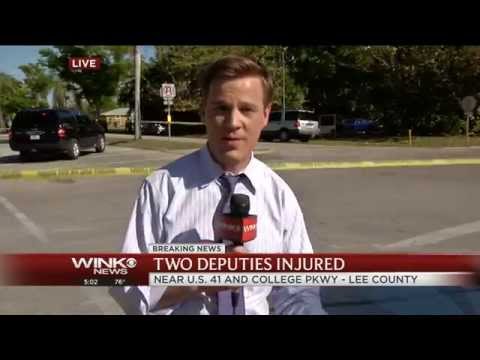
Field reporters are similar to newsreaders but the difference is field reporters are at the location where the news story is at. They give out information that is at the scene so that people know in depth what is happening. The field reporter is almost always live as it is the best way to keep up too date with the situation, this means that people can watch it and get as much information as possible. Field reporters also have to dress smart as they are informing people about events and they need to be taken seriously.


Interviewing

Interviews are a important role in the media industry as it is a key source of finding out information. The interviews can either take place at the subject location or in the studio and is most commonly used by news channels as they are a good source of information. These interviews can be with people  from the streets that have witnessed the story, these can be important as you get first hand information from people so you know the full story. Also sometimes you get interviews with a expert even though they may have not been at the location or the scene, this is because they can describe why the situation happened with the knowledge they have about the subject. Interviewing the victim is important as well as it can bring a certain effect  on the viewer, for example if they interviewed a relative of someone who had just died you get a very personal story.


Report structure

This is a big key in the news industry as the structure of the show determines what news will be at the top of the list. When you have some really important information it will always be at the top of the list and shown at the beginning and the less important stuff is played towards the end. Doing this keeps the viewer watching so that they can find out all of the information.


Realism

Realism is based on real people and real stories. For example realism documentaries include real peoples stories and normally follow information about a certain person or subject. Realism effects the audience in a way that a fictional character wouldn't. If it was a fictional character people would feel a emotional connection as much as with a real person.

Dramatization

Dramatization is the exaggeration of a subject that gets built up within a documentary. This appears quite a lot when documentaries are prejudice or bias. Its not very good to have dramatization in something like a documentary because it can appear to be very one sided and can turn the audience against the stuff being said.

Narrativisation 

Narrativisation documentaries are told in the way of a story and are acted out with a beginning, middle and end. It will always be based on real events other wise it wont be factual programming. It effects the viewers as they get to find out information the same as any other documentary, just this is shown in the form of a story.


Wednesday, 2 March 2016

The News

Anchor


Studio Report


Field Report

I pieced camera
They are generally stood in front of the scene or anything that relates to what is happening
They tend to interview the public who whitened the event. The news anchor normally asks the field reporter a question as it leads to the field reporter.


Vox Pops

Generally ask one question.

Friday, 26 February 2016

Legal Acts


Understanding the ethical and legal considerations when working in the creative media sector. 

Laws - Are written, approved and enforced by a particular government. If you break a law you could face police investigation, court appearance and fine.

Ethics - Rules of conducts, responsibility (not the law). If you break as ethical code you may be forced to act with ethical disapproval from your peers or professional body.


Legal and Ethical constraints 

Legal issues have a specific law behind them, which will result in legal consequences if you don't obey it. Example: Murder - Murder will have legal charges.

Ethical issues have no force of law, but are of a nature that affects society around you, or has consequences for the people involved. Example: if someone got a abortion, it is not illegal but will cause you social problems with other people who might have wanted the baby alive.


Privacy Law


  • Privacy ;aw is a regulation that protects a persons right to be left alone.
  • People are allowed to lead their lives without public scrutiny.
  • The right to privacy
  • The right to be left alone - harassment and data protection 
Example - The Rupert Murdoch phone hacking scandal was a very serious case where the British newspapers were hacking into people phones like the murdered school girl Milly Dowler and trying to get as much information as they can.


Copyright and Intellectual Property Law

Intellectual property is something that is unique to you if physically created. i.e. an idea is not your intellectual property but the words you write are.

Copyright is a type of intellectual law that protects your work. 

By knowing your rights and having the right type of protection you can stop people stealing or copying.
  • The name of your product or brands.
  • Your inventions.
  • The design or look of your product.
  • things you write, make or produce.
Example - A famous case of copyright was the Star Wars vs Battlestar galactica. Battlestar had borrowed a little too much from star wars as they had been accused of stealing 34 distinct ideas from Star Wars. 


Libel Law

To publish or print something that is not true or may harm that persons reputation and may bring hate or scorn towards them.

It must be a statement which claims to be fact and is not clearly identified as an opinion.


Safe guarding

Safeguarding is making measurements to protect people from any harm. An example of this is places that use lanyards so only people who work there can go in.


Obscene publication act 1959

Obscene publication act is something that protects the viewers from certain obscene films that includes extreme violence and sexual content. An example of this would be the human centipede 2 was banned in the UK as it was "sexually violent and potentially obscene", as the British board of film classification said.


Official secrets law 1989
Official secrets law is there to protect things like government information from being leaked to the general public.


When publishing anything that will be seen by the public you need to be careful that you dont say anything that could cause offence to anyone. For example if it contains racism, sexism, homophobic comments or anything like that then it can tend to offend people. There was a case called sachsgate where Russel brand held his own chat show and when he and Jonathan ross called Andrew Sachs basically abusing him over the phone. To stop something like this happening you need to look at the laws on what you are and arnt allowed to say to people as if you say the wrong things it can often get out of hand.

http://www.theguardian.com/media/2009/apr/03/russell-brand-jonathan-ross-bbc-fine  


Wednesday, 24 February 2016

MediaCom marketing


  • I normally here about films from either adverts or people talking about them. But the people talking about them normally also get them from advertisements.
  • When i go to the cinema i like the atmosphere and the quality of the picture but the downside is its sometimes hard to enjoy if people are being noisy and loud.
  • I normally go to the Cineworld in Middlesborough. And i go with my friends.
  • My favourite film is the Martian.